

The Empowerment Program (EP) seeks to challenge entrenched patriarchal misconceptions depicting women as inferior members of society. The program aims to increase gender equality in Shan communities affected by conflict, displacement and violence through responsive and effective women-led programming.
The program started in 1999 as in-house internship program for 2 young women from Shan State to build their capacity to run community-based programs. After the first organizational development workshop of SWAN in 2003, the Women’s Empowerment Program (WEP) was formally set up by combining the Internship Program and a series of skills development workshops on women’s human rights. At SWAN’s 2025 Annual meeting, the Women’s Empowerment Program was renamed the ‘Empowerment Program”.
Goal
To promote gender equality in Shan communities by strengthening women’s leadership capacity, resilience, awareness and active participation in community and political life.
Objectives
The Empowerment Program aims to address structural gender inequalities and expand women’s leadership roles in both private and public spheres. Specific objectives of the program are:
- The Empowerment Program aims to address structural gender inequalities and expand women’s leadership roles in both private and public spheres. Specific objectives of the program are:
- To build women’s leadership capacity through structured learning, skills development, and mentorship opportunities.
- To Increase women’s confidence and decision-making power in households, communities, and public life.
- To strengthen their knowledge of gender equality, human rights, justice, and political issues among women
- To increase women’s representation and participation in community leadership, civic processes, and advocacy spaces.
- To promote community-level recognition and acceptance of women as leaders, organizers, and change-makers.
Main Activities
Objectives
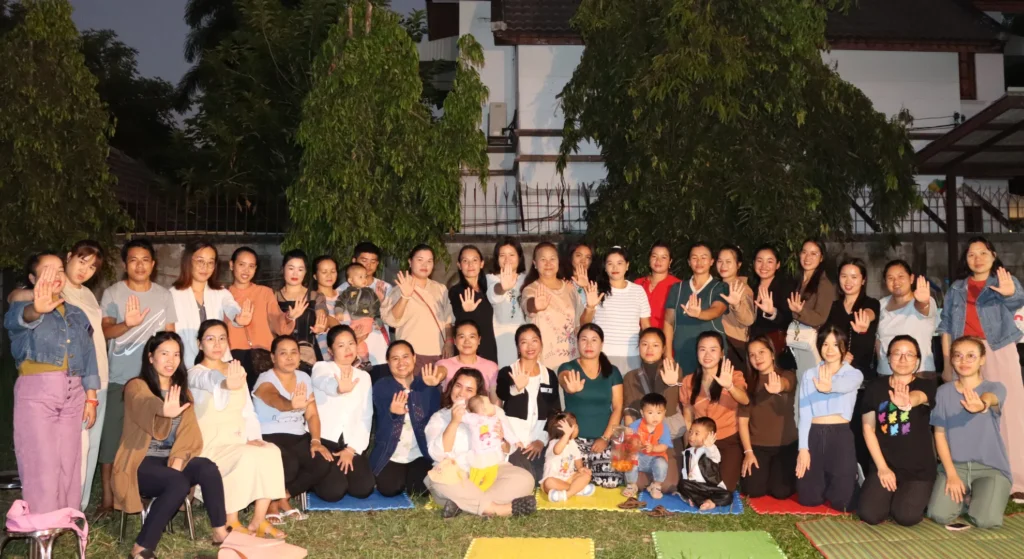
Women’s Exchanges are the foundation level of the Empowerment Program (EP) activities. These exchanges provide a space and time for women in the community to build confidence by joining together to share their experiences and stories of violence and other gender issues.
Background
From 1999, SWAN members regularly attended Women’s Exchanges in Chiang Mai, originally organized by Migrant Assistance Programme, currently known as MAP Foundation. In 2007, SWAN began running Women’s Exchanges in IDP camps along the border areas of the Thailand and Shan State in Burma/Myanmar. In 2011, SWAN began organising Women’s Exchanges inside Burma/Myanmar.
Women’s Exchanges, which are held over one day, are facilitated by focal points in Shan communities in Shan State, Kachin State and Sagaing Region. There are 30 – 35 Exchanges conducted every year with 15- 30 women attending each one.
Objectives
The internship program aims to provide young Shan women with the skills and practical workplace learning to be able to take on positions at SWAN and in civil society organizations and to advocate for change in their communities.
Background
SWAN started its internship activity in 1999 with an in-house program for 2 young women from Shan State. In 2003, SWAN extended Internship Program training 6 young women from Shan community for one year in Chiang Mai, and it was run continuously until 2009. From 2014 to 2020, Taunggyi center ran the internship program. To date, 68 young Shan women successfully completed their internships in Chiang Mai or Taunggyi. After finishing their internship, some became SWAN staff and some worked with a range of other organizations.
Objectives
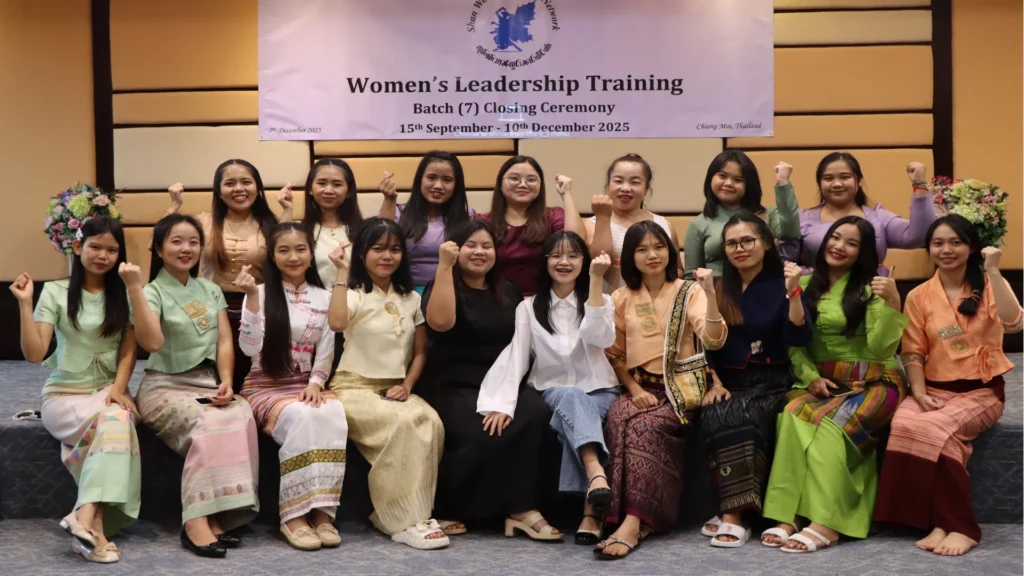
Women’s Leadership Training aims to strengthen the voice of young Shan women in Burma/Myanmar and train them for positions of leadership. The intention is to reach out and empower marginalized women and open up a dialogue about women’s rights and gender equality in remote Shan communities. This training is mainly for young marginalized women who have less opportunity to continue higher education, to enable them to access political and social training to step into a leadership role.
Background
In response to communities’ requests the first training named “Young Women’s Leadership Training” started in 2012 and was conducted as a residential program over an 8-month period. From 2012 to 2014 eighteen trainees from different parts of Shan State and Kachin State completed the training in Chiang Mai. In 2016, 2019 and 2020, the training was implemented inside Burma/Myanmar over a period of 6 months. 63 trainees completed this intensive training from 2012 to 2020, and 14 in 2025. Most of the alumnae became SWAN’s focal points and implemented Women’s Exchanges in their communities. Some work with local and international organizations for human & women’s rights, and political and social development.
Objectives
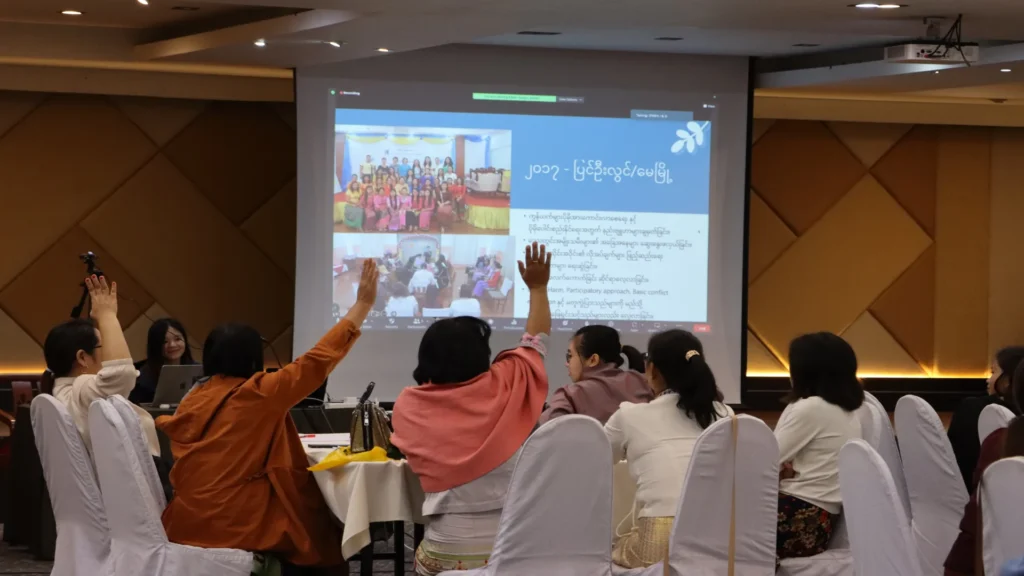
The Training of Trainers (TOT) aims to strengthen the knowledge and facilitation skills of our focal points and enhance their capacity to organize and facilitate training workshops in their respective townships. The program also seeks to recruit additional trainers in order to expand Women’s Exchange activities to more areas in Shan State. In addition, the TOT provides a space for participants to share updates on the current situations affecting women in their communities. These discussions help guide the direction of SWAN’s future initiatives while also strengthening and expanding our networks.
2025 TOT: Attended by 11 participants, including focal points, community health workers, data collectors, and alumnae of the 2024 Political Development Training.
2026 TOT: Attended by 10 participants including former focal points, community health workers, and alumnae of the 2025 Women’s Leadership Training.